To Cut or Not to Cut: A Pharmacist-Informed Guide to Splitting Diuretic Tablets
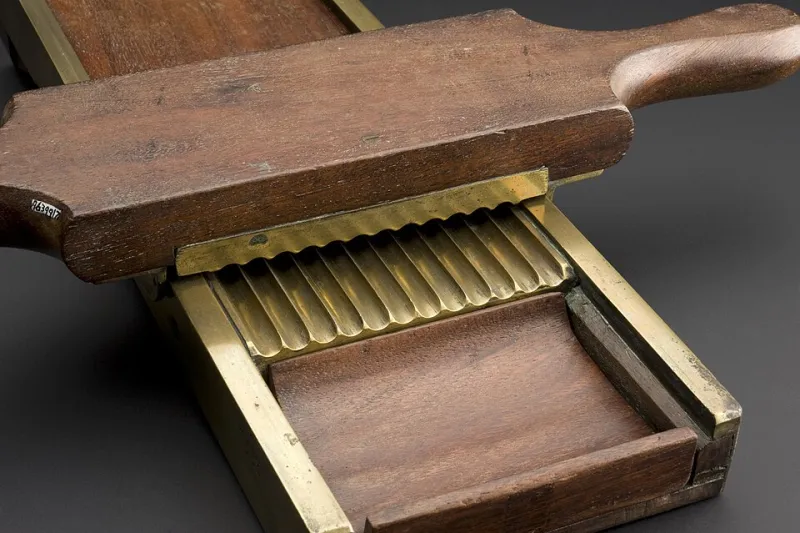
Photo: Unknown, CC BY 4.0, via Wikimedia Commons
Few questions arrive at a pharmacy counter more often than this one: Can I cut this pill in half? The reasons are practical. A patient may want to stretch a prescription, fine-tune a dose, or make a tablet easier to swallow. For diuretics, the answer is not a simple yes or no. It depends on the tablet, the drug formulation, and the prescriber's instructions.
Why Tablet Splitting Is Not Automatically Safe
A tablet is not a homogeneous piece of chalk. Manufacturers design it with a specific dose, release mechanism, and coating. Some tablets are scored—marked with a groove—to make dividing easier. Others are not. Extended-release tablets are designed to release medicine slowly over hours; cutting them can release the entire dose at once. Enteric-coated tablets protect the stomach or the drug itself; splitting can defeat that protection. Even immediate-release tablets can crumble, producing halves that are not equal.
For diuretics, inaccurate splitting can matter. Too little medication may allow fluid to build up or blood pressure to rise. Too much may cause dehydration, dizziness, or electrolyte problems. The goal is not perfection—few splits are perfect—but a reasonable, pharmacist-approved plan.
The Three Questions That Decide It
Before you reach for a pill cutter, ask three questions. First, is the tablet scored? A score line is a clue, not a guarantee, but it is a starting point. Second, is it an immediate-release formulation? If the label says extended-release, delayed-release, or enteric-coated, stop. Third, has the prescriber or pharmacist approved the split? A tablet may be physically divisible but still not appropriate for your prescription.
Which Diuretics Are Usually—but Not Always—Dividable
Many immediate-release furosemide tablets are scored and can be split when a clinician approves the change. However, manufacturers and strengths vary. Some tablets are small, brittle, or unscored. Torsemide and bumetanide tablets may also be scored depending on the product, but their small size can make accurate splitting difficult. Spironolactone tablets are sometimes scored, but the dose and condition matter. Capsules should not be split.
The safest approach is to check the actual bottle and package insert, not a memory of a previous prescription. Different generic manufacturers can use different tablet designs. If the label does not clearly indicate a score line, ask the pharmacist before cutting.
The Hidden Costs of a Bad Split
A pill cutter is inexpensive. An emergency department visit is not. Uneven halves can lead to swings in blood pressure, fluid retention, or dizziness. Crumbled tablets can be difficult to dose. If a patient splits a tablet to save money but ends up with poor control, the savings disappear quickly.
There is also a practical issue: some halves are hard to store. If a pharmacist approves splitting, ask how to store the unused half—whether it can be kept in a pill organizer or should be used promptly. Follow the pharmacist's instructions for that specific medication.
A Step-by-Step Before You Cut
- Read the prescription label and look for words such as extended-release, delayed-release, or enteric-coated. If you see them, do not cut.
- Check whether the tablet has a score line. If it does not, call the pharmacist.
- Confirm with the prescriber or pharmacist that the new dose is intended.
- Use a clean pill cutter, not a kitchen knife. Wash and dry your hands.
- Cut one tablet at a time. Do not stockpile halves unless the pharmacist says it is safe.
- If the tablet crumbles or the halves look very unequal, do not guess. Call the pharmacy.
Questions to Ask Your Pharmacist
- Is this specific tablet scored by its manufacturer?
- Is it immediate-release, or does it have a special release coating?
- Can I safely split it to get the dose my prescriber intended?
- How should I store the other half?
- Will splitting change how my insurance covers the prescription?
- Is there a lower-strength tablet that would avoid splitting altogether?
That last question is often the best one. A lower-strength tablet may cost more, but it removes the uncertainty of splitting. If cost is the concern, ask about generic options, discount programs, or a 90-day supply. At Lasix.Shop, our pharmacists would rather help you find a practical solution than watch you guess at a dose with a kitchen knife.
When in Doubt, Don't Cut
A pill splitter is a tool, not a license to redesign a prescription. If the tablet is not scored, if the label mentions extended-release or enteric coating, or if you have not confirmed the change with a clinician, leave the tablet whole. The few dollars saved are not worth an inaccurate dose of a medication that controls fluid balance and blood pressure.
This article is for educational purposes and is not a substitute for professional medical advice.